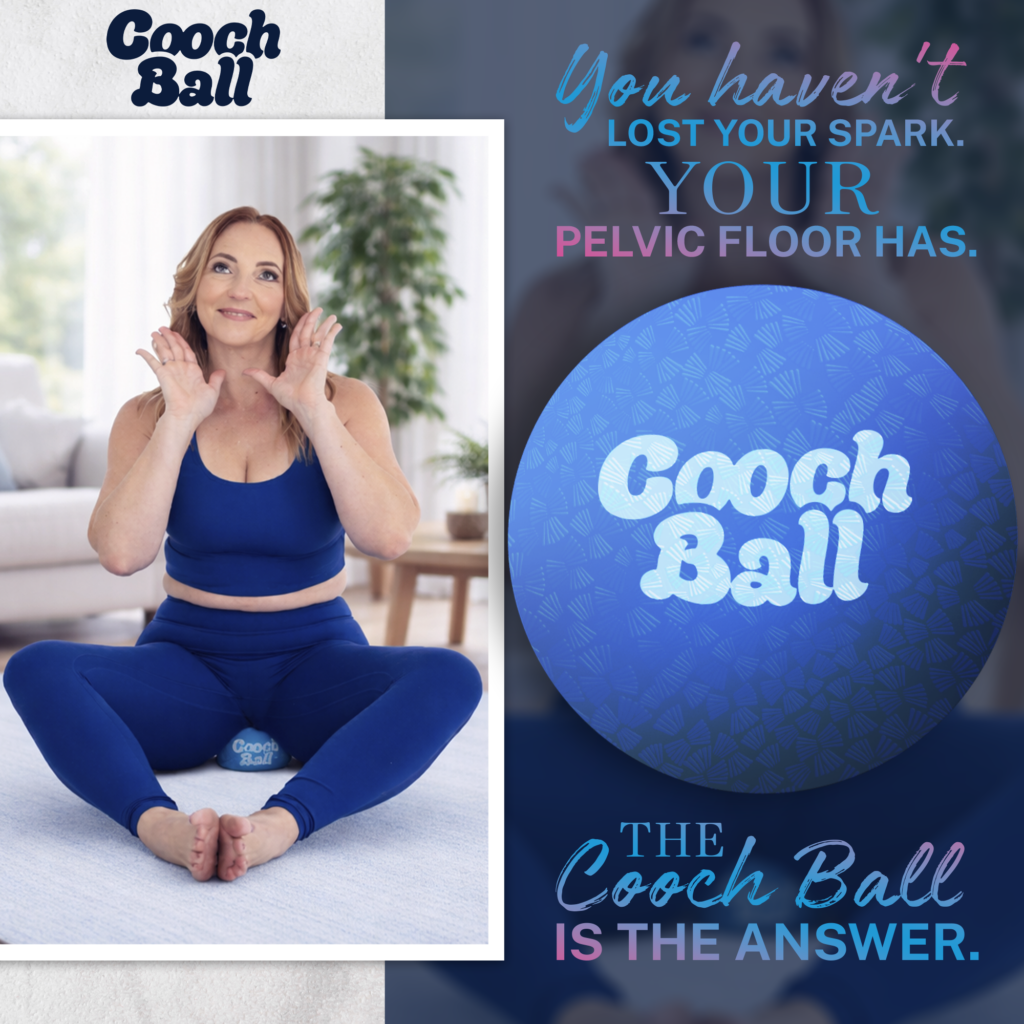
Pleasure Is Not Optional: Rethinking Pelvic Floor Health After Birth
“The day I leave this planet, I want an earth-shaking orgasm to send me off.”
It’s a bold statement — but behind it is a truth we don’t talk about enough:
Pleasure is not a luxury.
It’s a core part of women’s health.
And yet, many women are taught to expect the opposite.
After birth, experiences like leaking, pain, or diminished pleasure are often dismissed as “normal.” Something to manage. Something to accept.
But according to pelvic floor expert Jana Danielson, that framing is part of the problem.
These experiences may be common — but they are not normal.
And they are not inevitable.
The Myth of “Just Do Your Kegels”
For decades, women have been told that strengthening the pelvic floor is as simple as doing Kegels.
But this advice misses a critical truth:
A tight muscle is not the same as a strong one.
In fact, many women are not dealing with weakness — but with excessive tension.
A hypertonic pelvic floor (one that is too tight) can contribute to:
- Incontinence
- Pain during intimacy
- Difficulty with birth
- Muted or unsatisfying orgasms
Adding more contraction through repetitive Kegels can actually make these issues worse.
True pelvic floor health isn’t about constant tightening — it’s about balance.
The ability to both contract and fully relax.
The Role of Breath and the Body
One of the most overlooked tools for healing is something we do every day: breathing.
The diaphragm and pelvic floor work together as a system. When breath is shallow or restricted — often due to stress, posture, or habit — the pelvic floor loses its natural rhythm.
Over time, this can lead to dysfunction.
Relearning how to breathe deeply and diaphragmatically is one of the simplest and most powerful ways to begin restoring that connection.
It’s not complicated — but it is foundational.
Symptoms Are Signals
In a culture that often encourages women to push through discomfort, it’s easy to ignore what the body is communicating.
But pain, leaking, and loss of pleasure are not random.
They are messages.
Signals that something in the system needs attention, support, or change.
When we shift from seeing these experiences as problems to suppress… to information to understand… everything begins to change.
Reclaiming Pleasure
Pelvic floor health doesn’t just impact function — it directly affects pleasure.
During orgasm, the pelvic floor contracts and relaxes rhythmically. If the muscles are too tight, that rhythm is restricted. If they lack tone, it’s difficult to build intensity.
In both cases, the experience of pleasure is diminished.
Which challenges another quiet cultural narrative: that pleasure fades with age, motherhood, or time.
It doesn’t have to.
With awareness, support, and the right approach, the body is capable of healing, adapting, and experiencing pleasure across a lifetime.
A Different Starting Point
This work isn’t about perfection.
It’s about reconnection.
Understanding that the body is not broken — but often unheard.
And that even small, consistent practices — like intentional breathing or a few minutes of daily care — can create meaningful change over time.
Because women deserve more than coping.
They deserve to feel strong.
To feel connected.
To feel pleasure.
Not as an afterthought —
but as a birthright.